SISA AND LUZVIMINDA

OUR DEBT OF GRATITUDE TO BARNABAS
June 11, 2020
AND I TOOK THE ROAD LESS TRAVELED BY
June 13, 2020Independence Day Homily Friday, 12 June 2020, Mt 5:27-32
Since we launched our Covid Hopeline in the Diocese of Kalookan, I’ve noticed the great interest that our past two psychospiritual seminars (or webinars) have generated, on the mental health issues people are dealing with in the context of the Pandemic. Today’s first reading is about the mental health issue that the prophet Elijah himself had to deal with, and how his spirituality played a big role in his healing.
Just a quick background to the passage that we read from 1 Kings 19. We are told that Elijah had traveled for 40 days in the desert. He had to go into hiding because he was being pursued by the tyrant king who had ordered the massacre of all the prophets of Israel. There was no one left but Elijah. He was tired, hungry, feeling dejected and very depressed. He wanted to reach God’s holy mountain but he did not feel that he had the strength to endure the journey, so he wanted to die.
He asked God in his prayer to take him, to let him fall asleep and not be awakened anymore. I’ve heard of people describing the death wishes that accompany their problematic mental state that way. But we are told that the Lord sent Elijah an angel to wake him up, to feed him, so that he could regain his strength and carry on with his journey, until he reached Mount Horeb. Thank God for such angels who are there for us just when we’re about to give up.
On mount Horeb, he focused himself in order to be able to hear THE VOICE. There were too many other voices competing for his attention: first, a storm, then an earthquake, and then a big fire. But he did not hear the Lord in any of them. Where are you, Lord? His heart probably cried out. The Lord finally answered with a soft and gentle breeze and made his presence felt. The breeze prepared Elijah to hear God’s voice.
The voice is all that a prophet lives for. As a mouthpiece of God, he has nothing to say if he does not hear God’s voice. It took him a lot of focusing to be able to hear it. After he heard the gentle breeze, he poured his heart out to God and expressed a lament, “I had fire burning in my heart before, Lord. Now I feel like a smouldering wick, flickering, about to burn out.”
Today is our 122nd Independence day celebration. It is the 122nd year that we have been singing the “Lupang Hinirang” with right hands pressed on our chests. I wonder if you still feel some fire when you sing the part that says, “Alab ng Puso sa dibdib mo’y buhay.” We sing the song precisely to keep that fire of our shared sense of nationhood still burning in our hearts. But don’t you sometimes feel that the zeal with which we sing this line gets weaker and weaker? Like the prophet Elijah, we sometimes feel like we’re burning out, and we are unable to do anything except to express a lament? Parang walang magawa kundi ang magsumbong sa Diyos?
Yesterday, I felt my heart breaking as I read the story of Michelle Silvertino in the papers. She was a housemaid who thought she could already travel to her hometown in Camarines after Metro Manila was downgraded to GCQ. Her employer had brought her to the bus station, but there was no bus that would bring her to Bicol. So eager was she to see her three children in the province, she decided to stay and wait at the station, hoping against hope she could get a bus. She waited under a footbridge until she was noticed by the barangay hall that picked her up. But when they noticed that she was starting to manifest some Covid symptoms, they brought her back to the footbridge, where she was found again by someone else already in the throes of death. She did not make it to the hospital anymore. And the money she had with her was missing. She was buried in Pasay and her family was informed about her death and their only request now is to have her exhumed and cremated. They are now asking for just one little favor—if they could at least allow her ashes to be reunited with her orphaned children. Michelle was a solo parent.
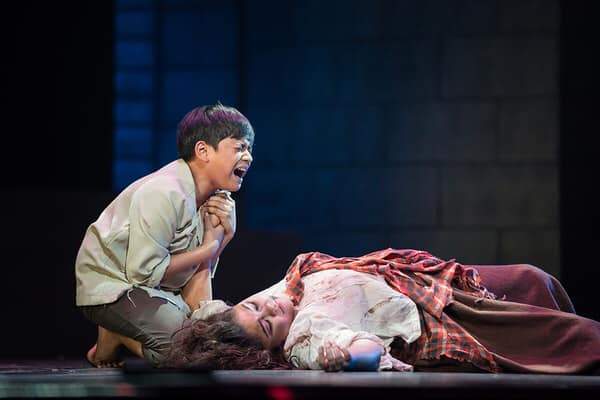
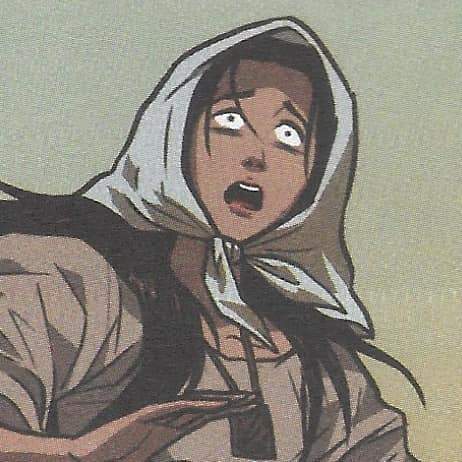
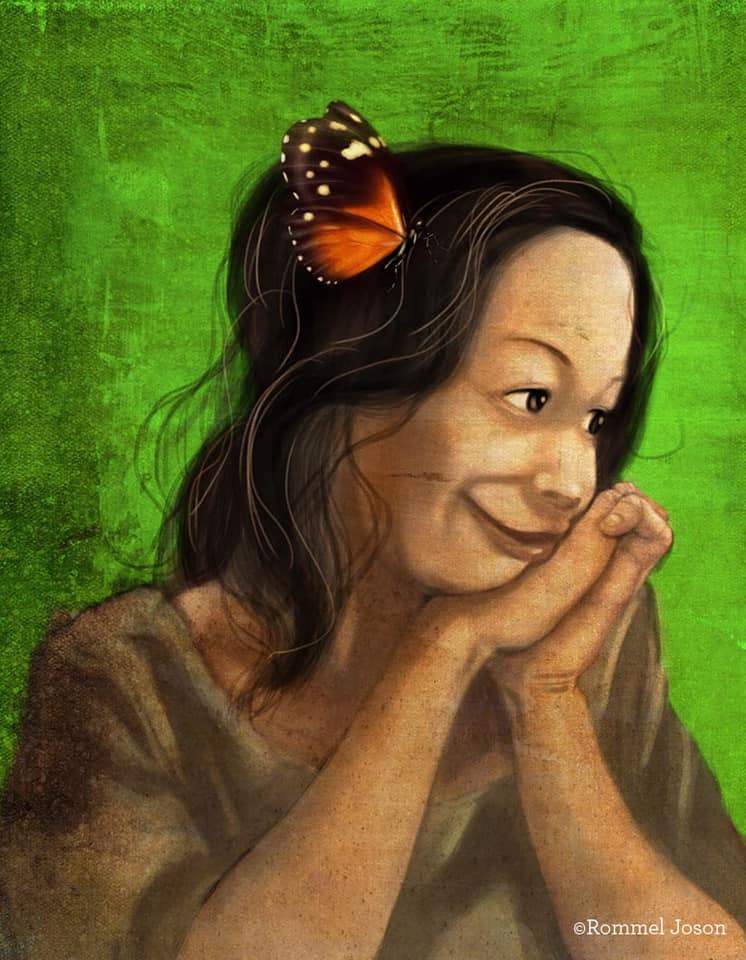
This woman reminded me of Sisa, Rizal’s fictional character in his Noli me Tangere, the woman who lost her sanity because of her desperate longing to be reunited with her children, Crispin and Basilio. This is surely not what we want to happen to our beloved country whom we call LUZVIMINDA, is it? We would surely not want her to be treated as a slave all over again, do we? Would we allow her to be suffocated by a disease under a footbridge, away from her children, and only to end up as a handful of ashes in an urn?
In our Gospel today, Jesus’ ridiciculous statement about plucking out one’s eye, or cutting off one’s hand or foot if it causes you to sin, is better understood as a rhetorical question. He makes it deliberately sound ridiculous, like, should you blame it on your hand if you were caught stealing, and wish to cut it off from your body because it had caused you to sin? Can my hand or my eye cause me to sin if it does not have a mind of its own?
Could Jesus have intended this Gospel for people who are so eager to cut off those parts of the body that they consider as a liability, or as useless, or good for nothing? I remember the story of a man who went to the doctor to consult about a wound that was festering on his foot. Apparently the doctor hit his foot with a stick and the patient writhed in pain. He said, “Doc, I came here for a cure to my wound. What did you hit me for?” The doctor said, “Good news, sir, we’re not going to have to cut off your foot yet because you can still feel it.”
Pain is generally an unpleasant experience, no doubt, but it is also a blessing. It is a signal that the body needs healing, or some intervention in order to get well. What is worse is when we cannot feel pain anymore. In Tagalog we have a saying, “Ang sakit ng kalingkingan ay ramdam ng buong katawan.” That saying is not always true. The body could be in such a serious state of disease that it no longer feels the pain of the other parts.
It is when we become indifferent, totally unaffected by what affects our country that we will truly find ourselves in deep trouble. When we do not value anymore our nation’s freedom and democracy which was bought by our ancestors and heroes at a huge price. When we no longer even remember the blood, sweat and tears shed by the generations before us. When we allow its institutions to be weakened by tyranny, when we let them fall apart and break into pieces and go down the drain, it is then that we forfeit the future of the next generations of Filipinos.
Let me end with a few lines from a poem by Andres Bonifacio:
“Walang mahalagang hindi inihandog nang may pusong wagas sa bayang nagkupkop. Dugo, yaman, dunong, katiisa’t pagod, buhay ma’y abuting magkalagot-lagot.”
“Ipagkahandog-handog ang buong pag-ibig hanggang sa ang dugo’y ubusing itigis
kung sa pagtatanggol, buhay ay kapalit, ito’y kapalaran at tunay na langit.”